Case Studies
AI-Powered Triage System For Regional Hospital Network
Cutting ER wait times by 62% and tripling patient diagnostics throughput with secure, HIPAA-compliant intelligence platforms.
Regional Hospital Network
Project Overview
A Streamlined Patient Journey That Reduces Wait Times And Improves Routing Accuracy.

The Challenge
Our client, a sprawling regional hospital network with over 20 core clinics, was facing critical bottlenecks in emergency department reception and specialist routing. Due to legacy patient intake software, manual classification led to prolonged diagnostics queuing and staff fatigue.

The Solution
Novatore designed and deployed a custom, secure Next.js medical portal integrated with secure LLM diagnostic triage agents. The platform automates pre-registration screening, structures raw clinician speech notes, and runs real-time severity scoring against HL7/FHIR healthcare pipelines.

Slow & Manual Intake
Automated intake reduced bottlenecks, accelerated triage, and enabled real-time prioritization-freeing staff to focus on high-value care.

Fragmented Clinical Data
Clinicians now access a single, unified view of patient data, enabling consistent triage decisions and reliable routing across shifts and sites.

Misrouted Patient Flow
Patients are now routed accurately and quickly to the right department, reducing delays and length of stay while maximizing capacity.
Heading Text
Our client, a sprawling regional hospital network with over 20 core clinics, was facing critical bottlenecks in emergency department reception and specialist routing. Due to legacy patient intake software, manual classification led to prolonged diagnostics queuing and staff fatigue.
Heading Text
Novatore designed and deployed a custom, secure Next.js medical portal integrated with secure LLM diagnostic triage agents. The platform automates pre-registration screening, structures raw clinician speech notes, and runs real-time severity scoring against HL7/FHIR healthcare pipelines.
0%
Wait Reduction
0x
Faster Workflow
0.0%
Decision Accuracy
$0.0M
Resource Savings
Tools & Tech Stack
Technologies We Build With


Results
Proven Builds, Not Just Prototypes
Real Projects, Real Outcomes — From AI-Powered Diagnostics To Fully Compliant Patient Platforms.
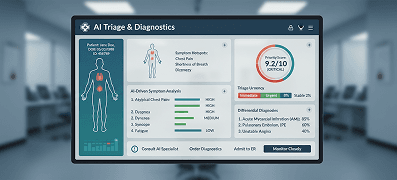
AI-Powered Triage System for Regional Hospital Network
AI-driven triage system for a regional hospital network. Cut ER wait times by 62% and tripled diagnostic throughput.
Symptom Triage
62% reduction
System Efficiency
3x faster
Challenge: Regional hospital teams faced long emergency-room wait times and fragmented symptom-assessment workflows that slowed diagnosis and patient routing.
Solution: We built an AI-powered triage platform that analyzes symptoms, prioritizes clinical urgency, and routes patients through one coordinated diagnostic workflow.
Result: The platform reduced ER wait times by 62% and made diagnostic throughput three times faster.
Read Case Study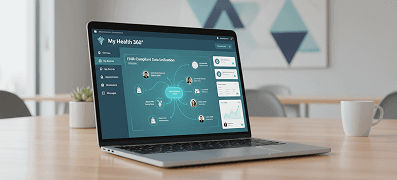
FHIR-Compliant Data Unification Platform
Unified patient records across 12 hospital systems using FHIR standards. Achieved 100% data interoperability with real-time EHR sync.
Symptom Triage
100% unified
System Efficiency
EHR sync
Challenge: 12 disconnected hospital systems stored patient records in incompatible formats, forcing clinicians to manually reconcile data across platforms.
Solution: We built a FHIR-compliant integration layer that unifies patient records in real time and syncs directly with each hospital's EHR system.
Result: Achieved 100% data interoperability across all 12 systems with live EHR synchronization.
Read Case Study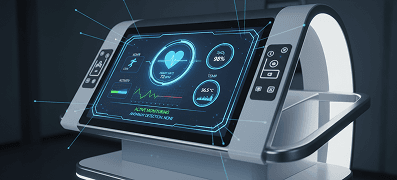
Remote Patient Monitoring for Chronic Care
IoT-enabled remote monitoring platform for chronic care patients. Reduced hospital readmissions by 40% with 24/7 vital tracking.
Symptom Triage
40% reduction
System Efficiency
24/7 tracked
Challenge: Chronic care patients required frequent in-person visits to track vitals, straining clinical staff and delaying early intervention.
Solution: We built an IoT-enabled remote monitoring platform that streams vital signs to care teams around the clock.
Result: Reduced hospital readmissions by 40% with continuous 24/7 vital tracking.
Read Case Study