Case Studies / Media & Entertainment
A Trusted Marketplace for Gamers Worldwide
Novatore helped ZeusX, a Singapore-based gaming marketplace, build a platform where gamers buy and sell accounts, in-game items, top-ups and gaming services.
0%
Growth in transaction volume
0+
Faster listing-to-sale time
0x
Marketplace categories
0x
Step protected trade process
Executive Summary
ZeusX set out to give gamers everywhere a safe place to trade gaming assets, from accounts and in-game items to top-ups, game coins and services. Buyers needed confidence they would receive what they paid for, and sellers needed a fast way to reach buyers. Novatore designed and developed the marketplace with React, Next.js and Node.js, including card and Bitcoin payment integration.
The Challenge
Gamers Had No Trusted Place to Trade.
Trading game accounts and items often happened through informal channels with real risk.

Risky trades
Buyers and sellers had no protection if a deal went wrong.

Scattered listings
Accounts, items and top-ups were spread across forums and social media.

Limited payment options
Gamers around the world needed payment methods they already use.
Our Solution
A Protected Marketplace for Gaming Assets.
We built a marketplace on React, Next.js and Node.js with secure, flexible payments.
Outcome
More Trades, Faster Sales.
ZeusX became a trusted, central marketplace for gaming assets.

Higher Volume
Marketplace transaction volume grew by 35–45%.

Faster Sales
Listings sell 25–35% faster.
Safer Trading
Buyer confirmation before seller payment builds trust on both sides.
Global Reach
Flexible payments let gamers trade from anywhere.
Built to Scale
The platform supports new games and categories as the market grows.
Tools & Tech Stack
Technologies We Build With


Results
Proven Builds, Not Just Prototypes
Real projects, real outcomes, from AI-powered platforms to products used every day.
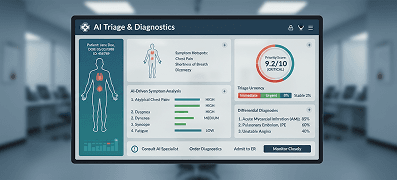
AI-Powered Triage System for Regional Hospital Network
AI-driven triage system for a regional hospital network. Cut ER wait times by 62% and tripled diagnostic throughput.
Symptom Triage
62% reduction
System Efficiency
3x faster
Challenge: Regional hospital teams faced long emergency-room wait times and fragmented symptom-assessment workflows that slowed diagnosis and patient routing.
Solution: We built an AI-powered triage platform that analyzes symptoms, prioritizes clinical urgency, and routes patients through one coordinated diagnostic workflow.
Result: The platform reduced ER wait times by 62% and made diagnostic throughput three times faster.
Read Case Study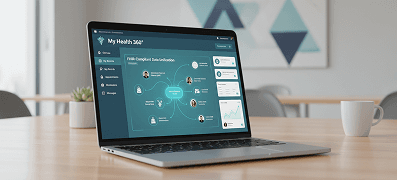
FHIR-Compliant Data Unification Platform
Unified patient records across 12 hospital systems using FHIR standards. Achieved 100% data interoperability with real-time EHR sync.
Symptom Triage
100% unified
System Efficiency
EHR sync
Challenge: 12 disconnected hospital systems stored patient records in incompatible formats, forcing clinicians to manually reconcile data across platforms.
Solution: We built a FHIR-compliant integration layer that unifies patient records in real time and syncs directly with each hospital's EHR system.
Result: Achieved 100% data interoperability across all 12 systems with live EHR synchronization.
Read Case Study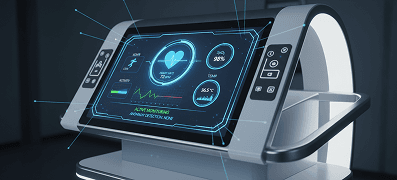
Remote Patient Monitoring for Chronic Care
IoT-enabled remote monitoring platform for chronic care patients. Reduced hospital readmissions by 40% with 24/7 vital tracking.
Symptom Triage
40% reduction
System Efficiency
24/7 tracked
Challenge: Chronic care patients required frequent in-person visits to track vitals, straining clinical staff and delaying early intervention.
Solution: We built an IoT-enabled remote monitoring platform that streams vital signs to care teams around the clock.
Result: Reduced hospital readmissions by 40% with continuous 24/7 vital tracking.
Read Case Study